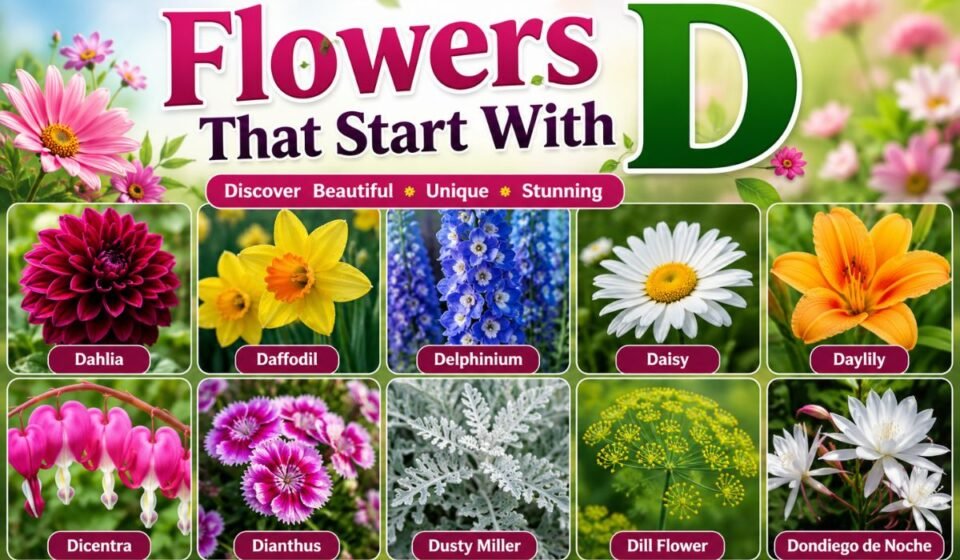
Flowers that start with D bring bold color and rich variety to any garden. From the cheerful Daffodil to the elegant Dahlia, this letter offers some of the most loved blooms in the world. Gardeners, florists, and flower lovers all turn to D flowers for their beauty and versatility.
This guide covers common and rare D flowers. You will find growing tips, color options, meanings, and safety notes. Whether you want cut flowers, pond plants, or pollinator favorites, this list has something for you.
Quick Answer: Popular D Flower Names
If you need a fast answer, here are the most searched D flower names people look for.
- Daffodil
- Dahlia
- Daisy
- Dandelion
- Daylily
- Delphinium
- Dianthus
- Digitalis (Foxglove)
- Dicentra (Bleeding Heart)
- Dutch Iris
These ten flowers cover most home gardens. They grow easily and suit beginners and experienced growers alike.
Full Alphabetical List Of Flowers That Start With D
Below is a wider list of D flowers gathered from gardening sources and botanical references. This list mixes common garden flowers with lesser known species.
| # | Flower Name | Scientific Name |
| 1 | Dahlia | Dahlia pinnata |
| 2 | Daffodil | Narcissus pseudonarcissus |
| 3 | Daisy | Bellis perennis |
| 4 | Desert Rose | Adenium obesum |
| 5 | Delphinium | Delphinium elatum |
| 6 | Dianthus | Dianthus caryophyllus |
| 7 | Dutch Iris | Iris × hollandica |
| 8 | Dragon Lily | Dracunculus vulgaris |
| 9 | Dog Rose | Rosa canina |
| 10 | Dutchman’s Breeches | Dicentra cucullaria |
| 11 | Daylily | Hemerocallis fulva |
| 12 | Dame’s Rocket | Hesperis matronalis |
| 13 | Dusty Miller | Jacobaea maritima |
| 14 | Drumstick Allium | Allium sphaerocephalon |
| 15 | Devil’s Bit Scabious | Succisa pratensis |
| 16 | Dyer’s Chamomile | Cota tinctoria |
| 17 | Double Hollyhock | Alcea rosea |
| 18 | Double Begonia | Begonia × tuberhybrida |
| 19 | Double Impatiens | Impatiens walleriana |
| 20 | Double Petunia | Petunia × atkinsiana |
| 21 | Double Tulip | Tulipa spp. |
| 22 | Double Peony | Paeonia lactiflora |
| 23 | Double Daisy | Bellis perennis |
| 24 | Double Daffodil | Narcissus spp. |
| 25 | Double Cosmos | Cosmos bipinnatus |
| 26 | Double Zinnia | Zinnia elegans |
| 27 | Double Poppy | Papaver somniferum |
| 28 | Double Anemone | Anemone coronaria |
| 29 | Double Ranunculus | Ranunculus asiaticus |
| 30 | Double Camellia | Camellia japonica |
| 31 | Double Hibiscus | Hibiscus rosa-sinensis |
| 32 | Double Azalea | Rhododendron spp. |
| 33 | Double Primrose | Primula vulgaris |
| 34 | Double Snapdragon | Antirrhinum majus |
| 35 | Double Stock | Matthiola incana |
| 36 | Double Sunflower | Helianthus annuus |
| 37 | Double Coneflower | Echinacea purpurea |
| 38 | Double Carnation | Dianthus caryophyllus |
| 39 | Double Lily | Lilium hybrids |
| 40 | Double Fuchsia | Fuchsia hybrids |
| 41 | Double Geranium | Pelargonium × hortorum |
| 42 | Double Marigold | Tagetes erecta |
| 43 | Double Morning Glory | Ipomoea purpurea |
| 44 | Double Foxglove | Digitalis purpurea |
| 45 | Double Clematis | Clematis hybrids |
| 46 | Double Hellebore | Helleborus orientalis |
| 47 | Double Sweet Pea | Lathyrus odoratus |
| 48 | Double Phlox | Phlox paniculata |
| 49 | Double Verbena | Verbena × hybrida |
| 50 | Double Chrysanthemum | Chrysanthemum × morifolium |
| 51 | Double Scabiosa | Scabiosa atropurpurea |
| 52 | Double Coreopsis | Coreopsis grandiflora |
| 53 | Double Gaillardia | Gaillardia aristata |
| 54 | Double Campanula | Campanula medium |
| 55 | Double Lavender | Lavandula angustifolia |
| 56 | Double Aster | Callistephus chinensis |
| 57 | Double Yarrow | Achillea millefolium |
| 58 | Double Lupine | Lupinus polyphyllus |
| 59 | Double Salvia | Salvia splendens |
| 60 | Double Nasturtium | Tropaeolum majus |
| 61 | Double Gazania | Gazania rigens |
| 62 | Double Portulaca | Portulaca grandiflora |
| 63 | Double Osteospermum | Osteospermum ecklonis |
| 64 | Double Calendula | Calendula officinalis |
| 65 | Double Viola | Viola cornuta |
| 66 | Double Pansy | Viola × wittrockiana |
| 67 | Double Bachelor’s Button | Centaurea cyanus |
| 68 | Double Columbine | Aquilegia vulgaris |
| 69 | Double Nigella | Nigella damascena |
| 70 | Double Balsam | Impatiens balsamina |
| 71 | Double Ice Plant | Delosperma cooperi |
| 72 | Double Dahlia Cactus Type | Dahlia hybrids |
| 73 | Double Decorative Dahlia | Dahlia hybrids |
| 74 | Double Pompon Dahlia | Dahlia hybrids |
| 75 | Double Ball Dahlia | Dahlia hybrids |
| 76 | Double Waterlily Dahlia | Dahlia hybrids |
| 77 | Double Orchid Dahlia | Dahlia hybrids |
| 78 | Double Collarette Dahlia | Dahlia hybrids |
| 79 | Double Dinnerplate Dahlia | Dahlia hybrids |
| 80 | Dandelion | Taraxacum officinale |
| 81 | Datura | Datura stramonium |
| 82 | Dicentra (Bleeding Heart) | Lamprocapnos spectabilis |
| 83 | Dodder Laurel | Cassytha filiformis |
| 84 | Disa Orchid | Disa uniflora |
| 85 | Dove Orchid | Peristeria elata |
| 86 | Drooping Star of Bethlehem | Ornithogalum nutans |
| 87 | Drummond Phlox | Phlox drummondii |
| 88 | Duranta | Duranta erecta |
| 89 | Dwarf Iris | Iris reticulata |
| 90 | Dwarf Morning Glory | Convolvulus tricolor |
| 91 | Dwarf Sunflower | Helianthus annuus |
| 92 | Dwarf Snapdragon | Antirrhinum majus |
| 93 | Dwarf Lupine | Lupinus nanus |
| 94 | Dwarf Columbine | Aquilegia flabellata |
| 95 | Dwarf Canna Lily | Canna indica |
| 96 | Dwarf Carnation | Dianthus caryophyllus |
| 97 | Dwarf Coreopsis | Coreopsis verticillata |
| 98 | Dwarf Dahlia | Dahlia hybrids |
| 99 | Dwarf Zinnia | Zinnia elegans |
| 100 | Dwarf Marigold | Tagetes patula |
This table shows only part of the full list. Many more D flowers exist across regions and climates.
How This 80 Flower List Was Curated?
This list was built using trusted gardening databases, botanical name records, and common nursery catalogs. Only flowers with confirmed D names were kept.
Duplicate names and unverified species were removed. Priority was given to flowers that are widely grown or well documented in gardening guides. This keeps the list useful and accurate for real gardening needs.
Common Flowers That Start With D
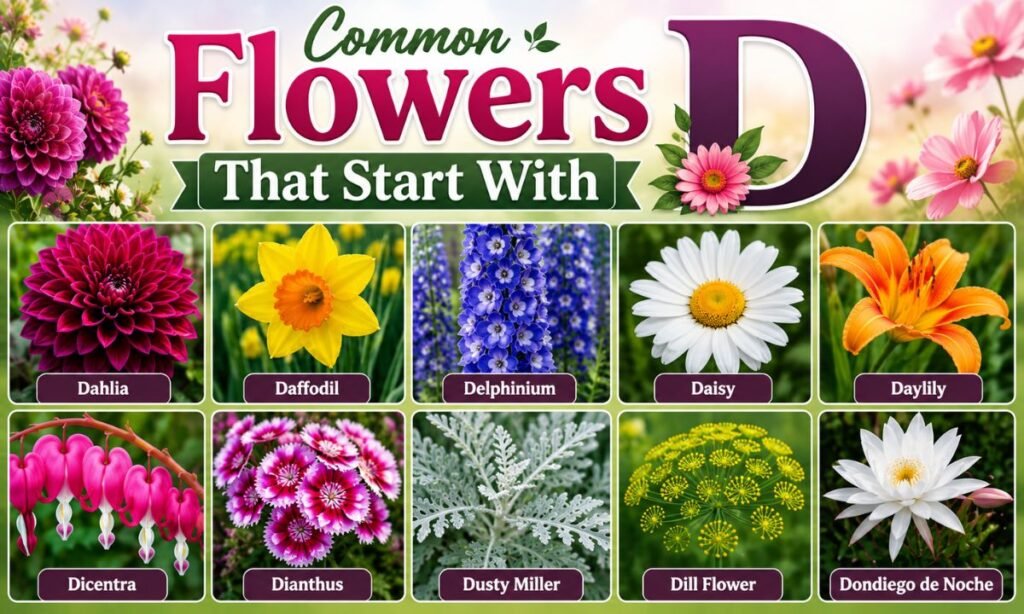
These are the most recognized D flowers grown in home gardens worldwide. Each one has its own charm, care needs, and history.
Daffodil
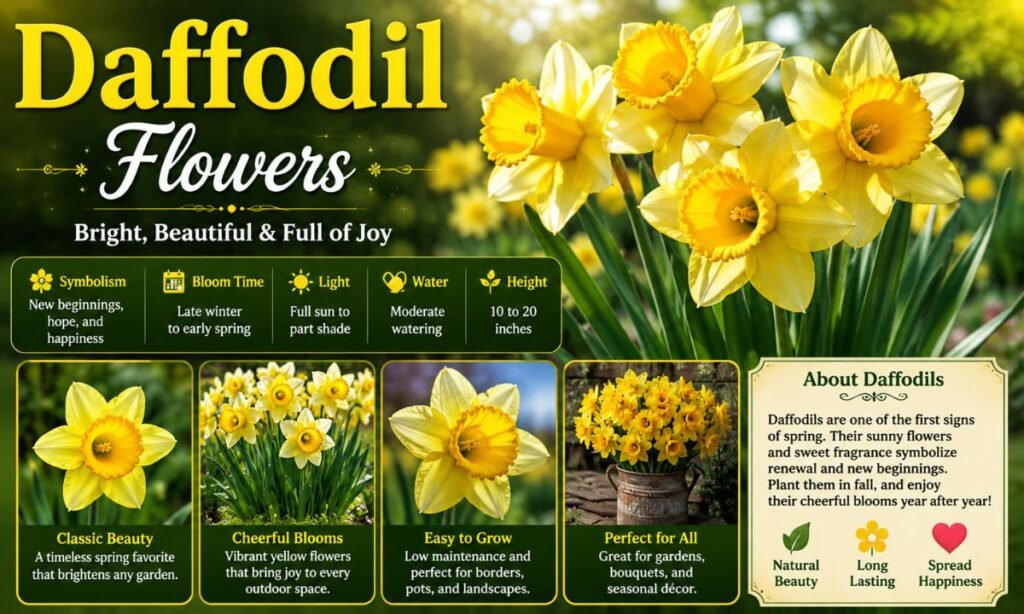
Daffodils are early spring bulbs known for their trumpet shaped centers. They come in yellow, white, and bicolor forms. Daffodils are easy to grow and multiply well over years.
Dahlia
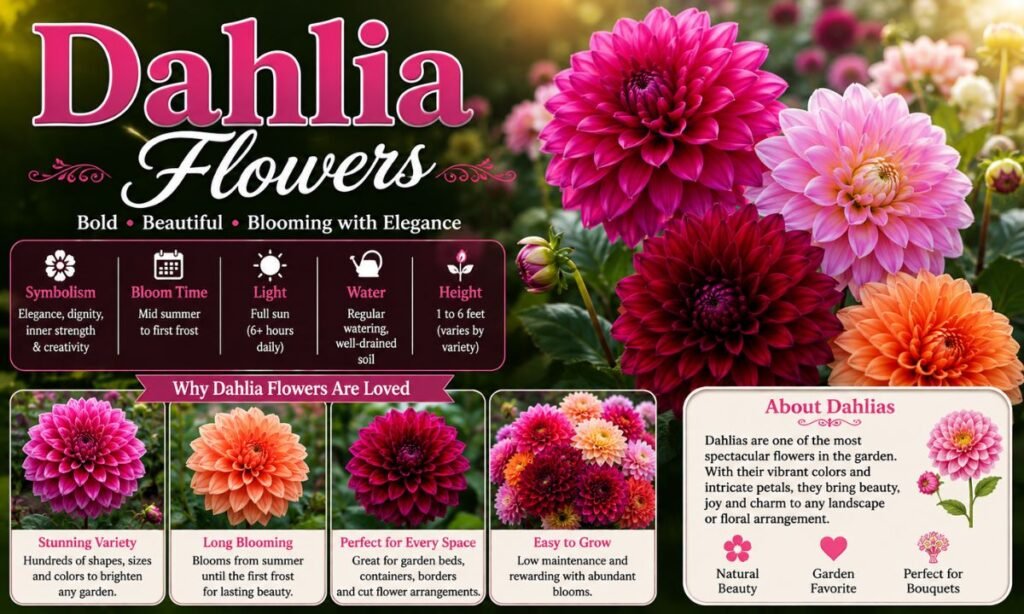
Dahlias offer huge flower variety, from small pom types to giant dinner plate blooms. They grow from tubers and bloom from summer through fall. Dahlias are popular for cut flower arrangements.
Daisy
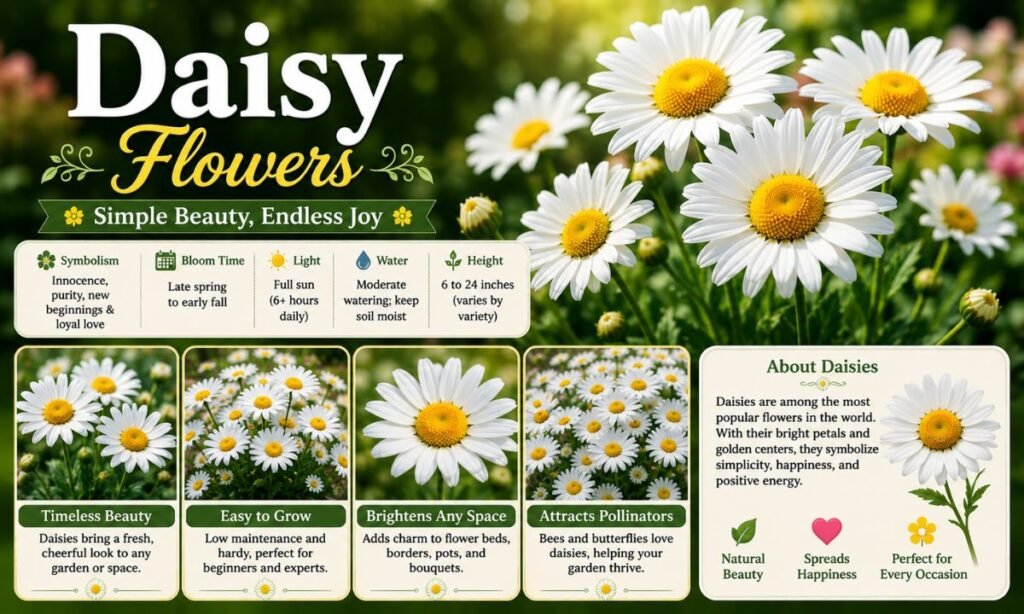
Daisies are simple, cheerful flowers with white petals and yellow centers. They symbolize innocence and new beginnings. Daisies grow easily in most soil types.
Dandelion
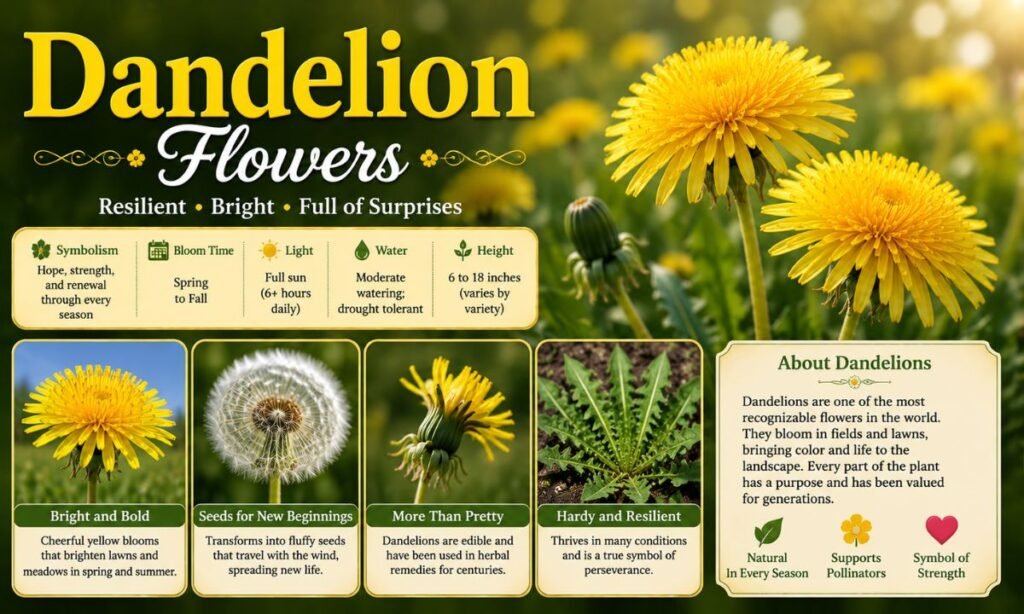
Dandelions are often seen as weeds, but they support early pollinators. Their bright yellow flowers turn into seed puffs later. Dandelions are edible and used in some herbal remedies.
Daylily
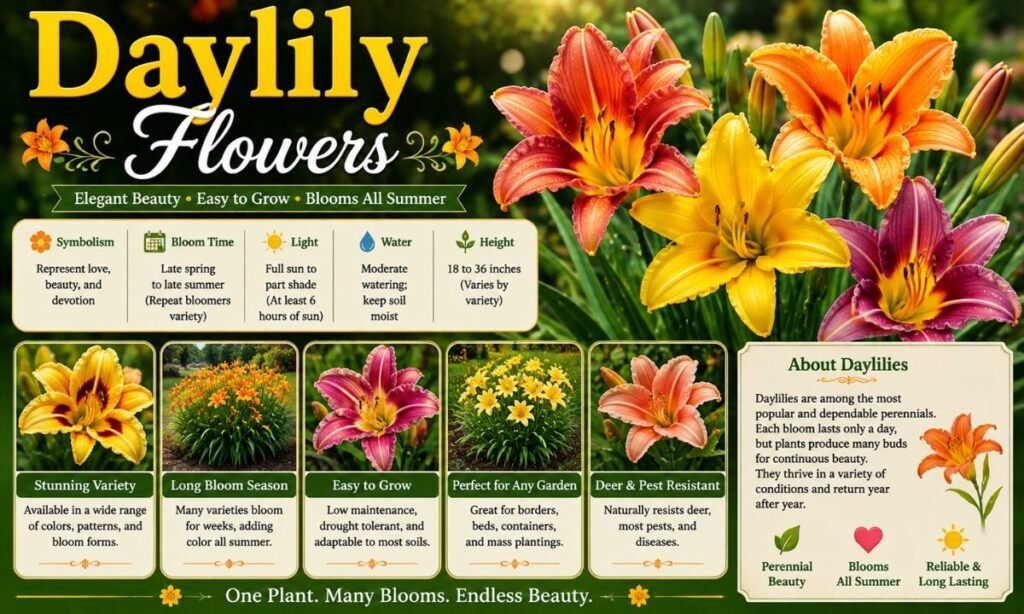
Daylilies produce flowers that bloom for just one day each. Despite this, the plant produces many buds over a long season. Daylilies are hardy and low maintenance.
Delphinium
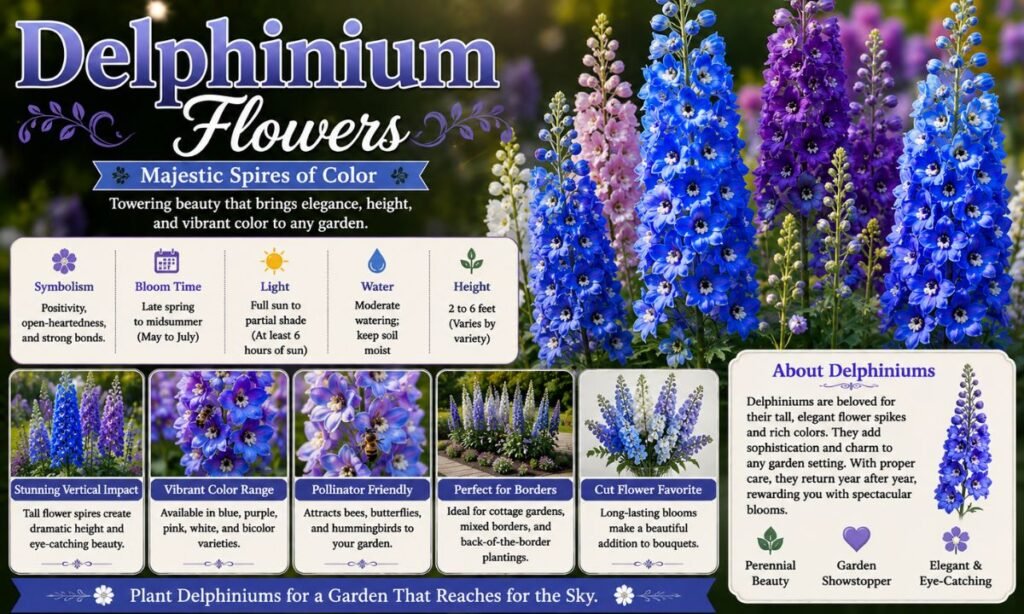
Delphiniums grow tall spikes of blue, purple, or white flowers. They add height and drama to garden beds. These flowers prefer cool climates and rich soil.
Dianthus
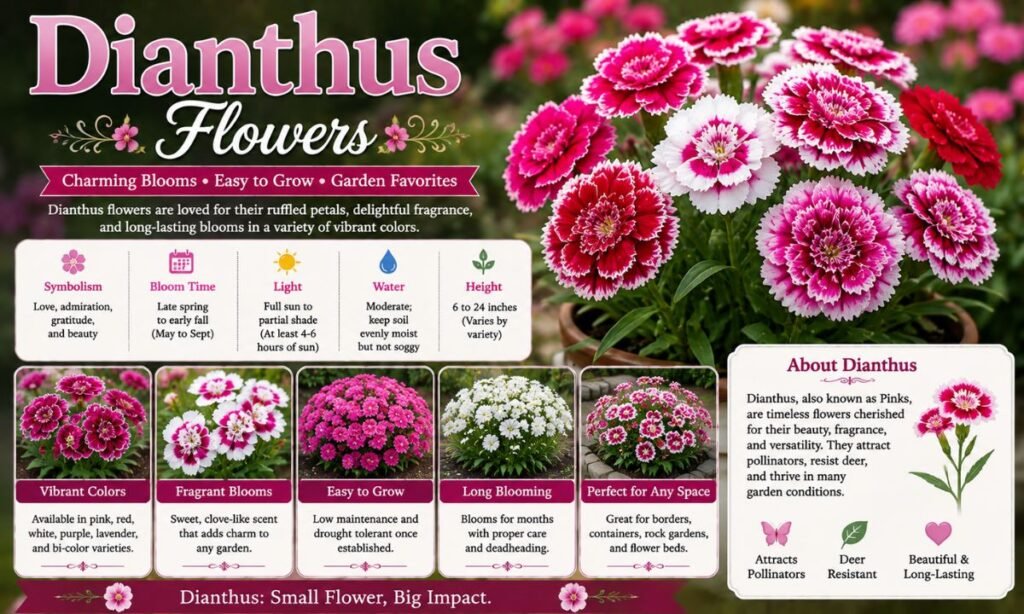
Dianthus, also called pinks, have a spicy clove like scent. They bloom in shades of pink, red, and white. Dianthus works well in borders and containers.
Digitalis
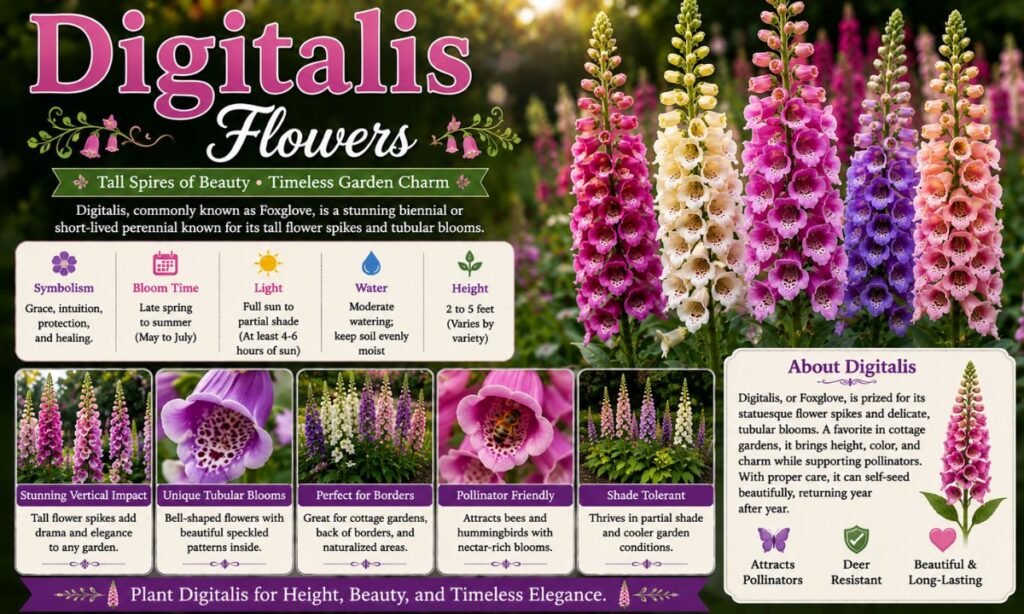
Digitalis, commonly known as Foxglove, produces tall spires of bell shaped flowers. It attracts bees and hummingbirds. Digitalis is toxic if ingested, so caution is needed around pets and children.
Dicentra
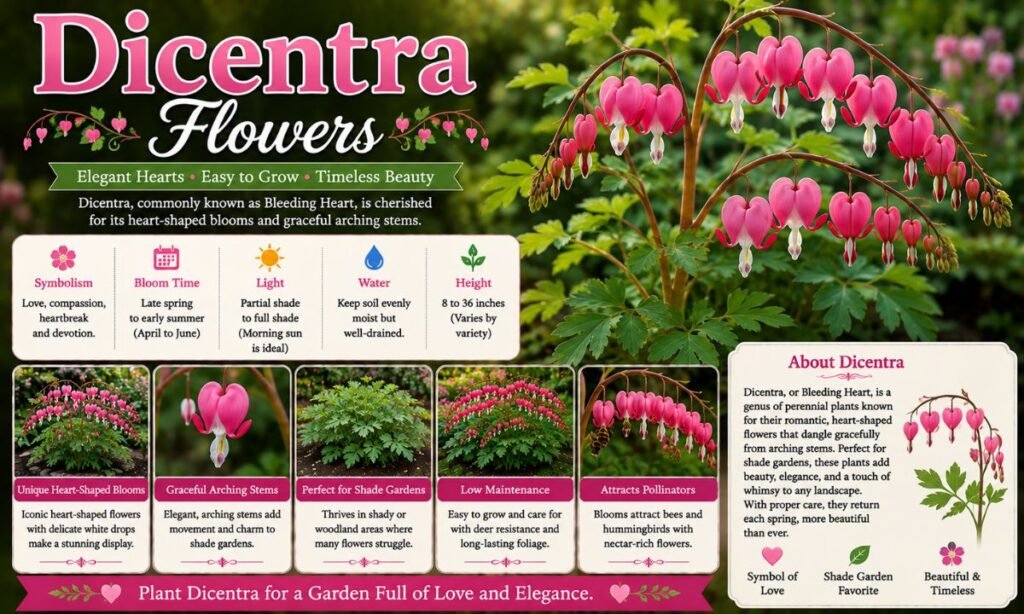
Dicentra, known as Bleeding Heart, has heart shaped pink or white flowers. It thrives in shaded garden areas. This plant is loved for its unique flower shape.
Dutch Iris
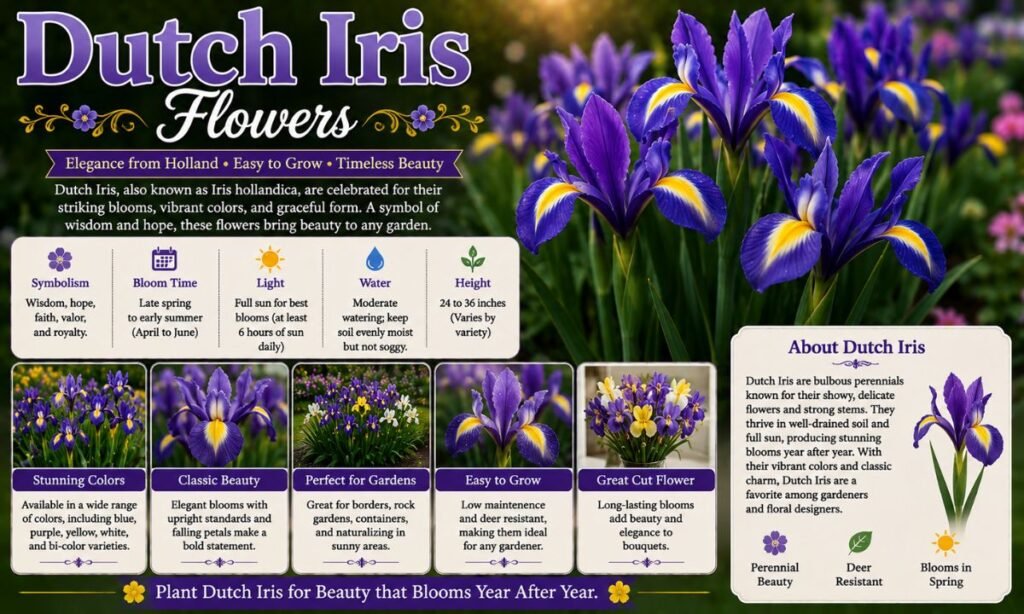
Dutch Iris bulbs produce elegant, slender flowers in purple, blue, or yellow. They bloom in late spring. Dutch Iris is a favorite for cut flower bouquets.
Dendrobium Orchid
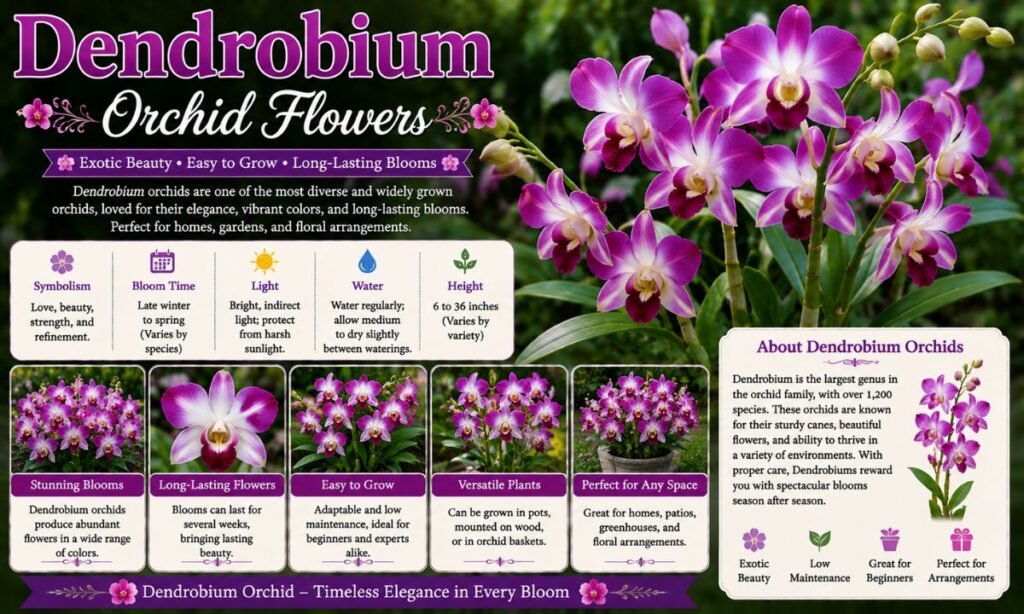
Dendrobium orchids are popular houseplants with long lasting blooms. They come in many colors and patterns. These orchids need bright, indirect light to thrive.
Desert Rose
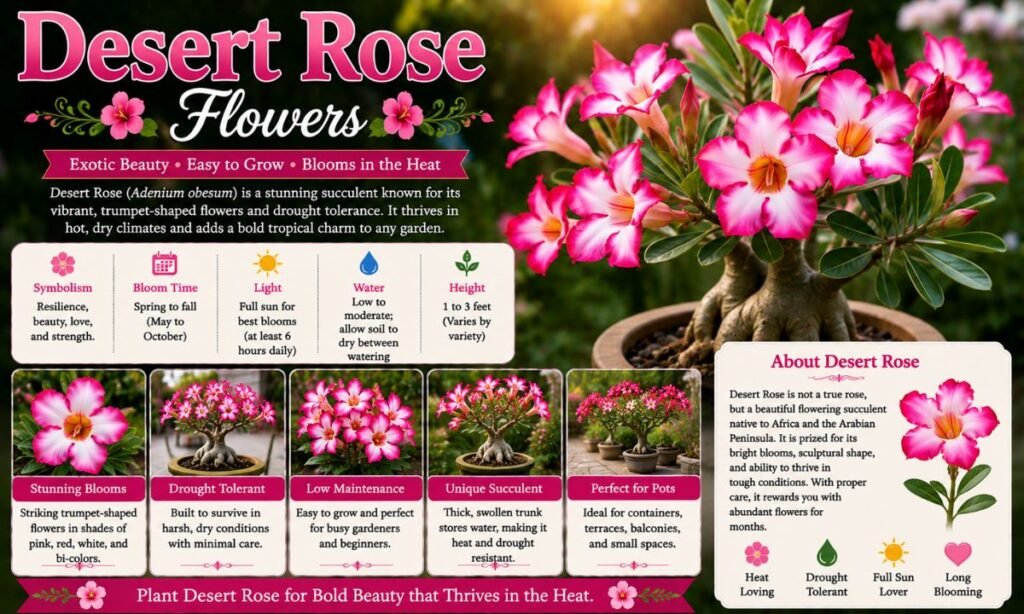
Desert Rose is a succulent shrub with thick stems and bright pink or red flowers. It suits dry climates and container gardening. This plant is toxic if consumed.
Daphne
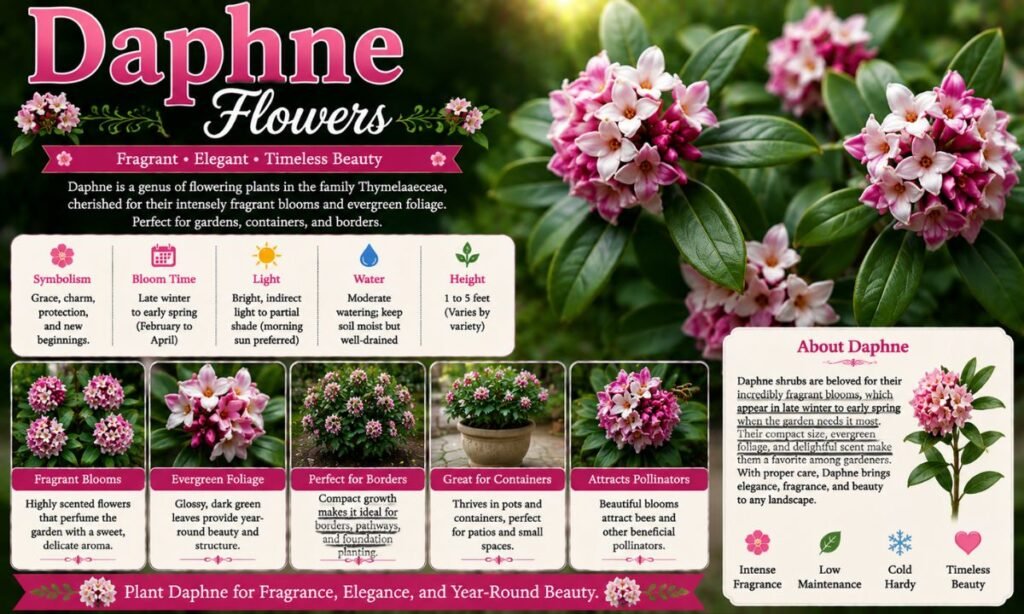
Daphne shrubs produce small, highly fragrant flowers in early spring. The scent is often described as intoxicating. Daphne needs well drained soil to grow well.
Dogwood Blossom
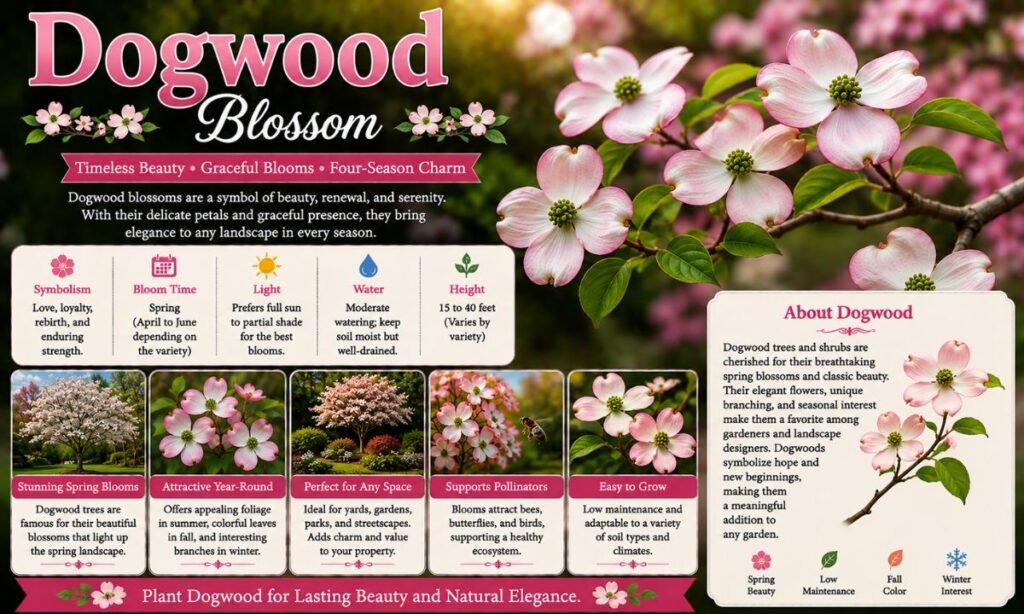
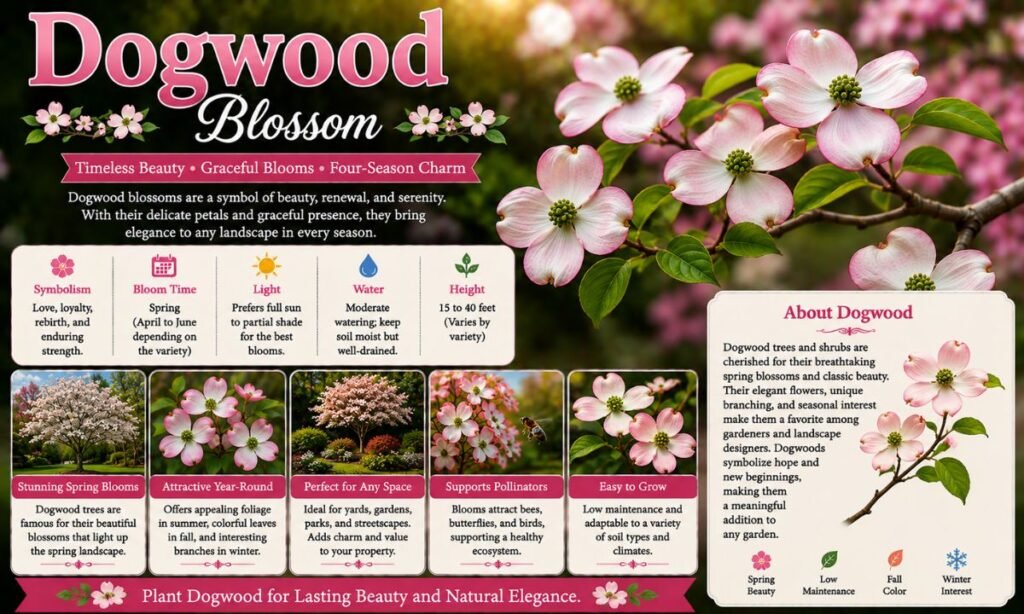
Dogwood trees bloom with white or pink flowers in spring. These blossoms are a symbol of renewal in many cultures. Dogwood flowers later develop into small berries.
Drummond Phlox
Drummond Phlox is an annual flower with bright, star shaped blooms. It grows well in sunny garden beds. This flower attracts butterflies and other pollinators.
Drumstick Allium
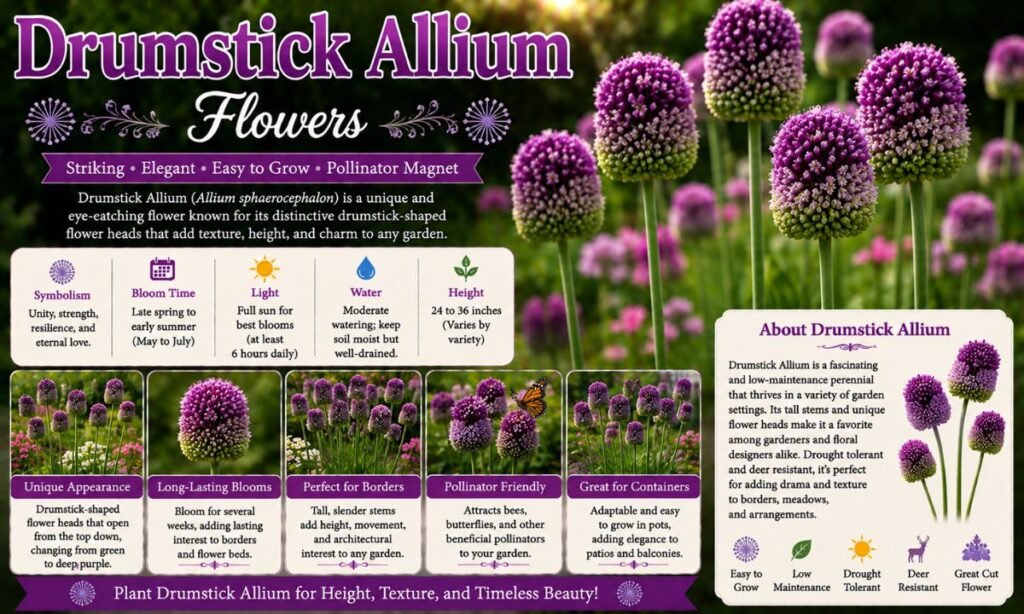
Drumstick Allium produces round, purple flower clusters on tall stems. It belongs to the onion family. This flower dries well and suits floral arrangements.
Douglas Aster
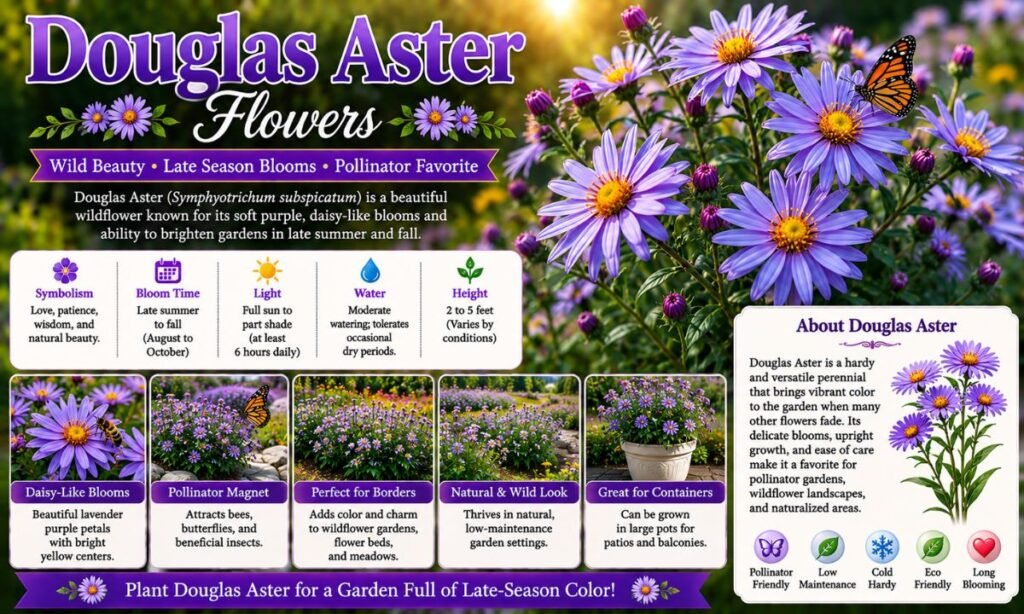
Douglas Aster is a wildflower native to parts of North America. It produces purple, daisy like blooms in late summer. This flower supports native bees and butterflies.
Other D Flowers Worth Knowing
Beyond the common names, several lesser known D flowers deserve attention.
- Dietes (African Iris)
- Deutzia
- Datura (Angel’s Trumpet)
- Dombeya
- Dahlberg Daisy
- Duranta
- Delosperma (Ice Plant)
These flowers may be harder to find at local nurseries but are worth searching for if you want something unique.
Types Of D Flowers By Growth Habit And Garden Use
D flowers fall into different categories based on how they grow. Some are perennials that return yearly. Others are annuals that complete their cycle in one season. Understanding growth habit helps with garden planning.
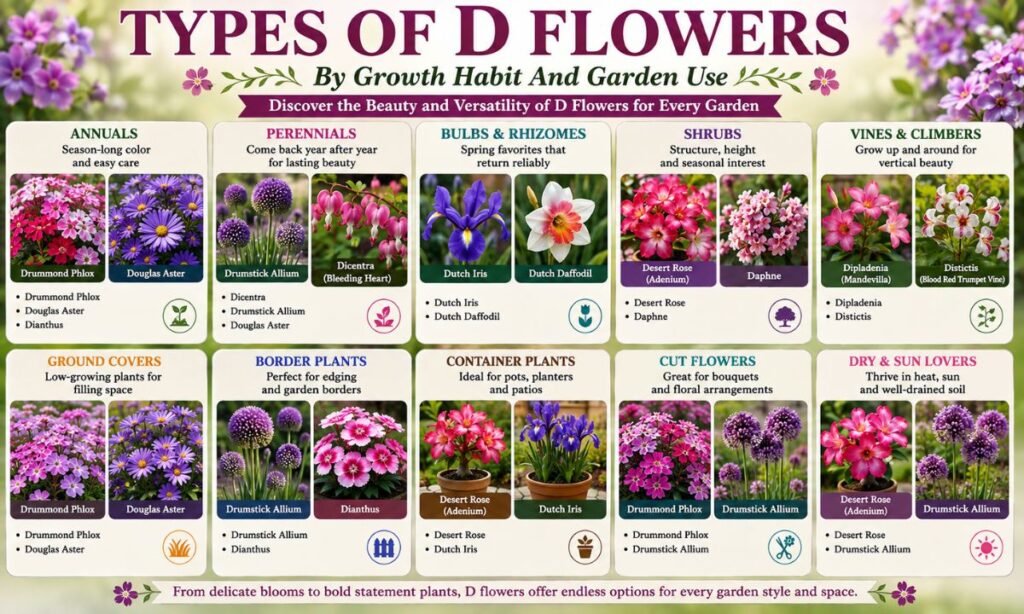
| Growth Type | Example Flowers | Notes |
| Perennial | Daylily, Delphinium, Dianthus | Return each year |
| Annual | Dahlia (in cold zones), Drummond Phlox | Replant yearly |
| Bulb | Daffodil, Dutch Iris | Plant in fall |
| Shrub | Daphne, Deutzia | Woody structure |
| Wildflower | Dandelion, Douglas Aster | Self seeding |
Perennials That Start With D
Perennial D flowers come back year after year with minimal replanting. They are ideal for gardeners who want long term color without yearly work.
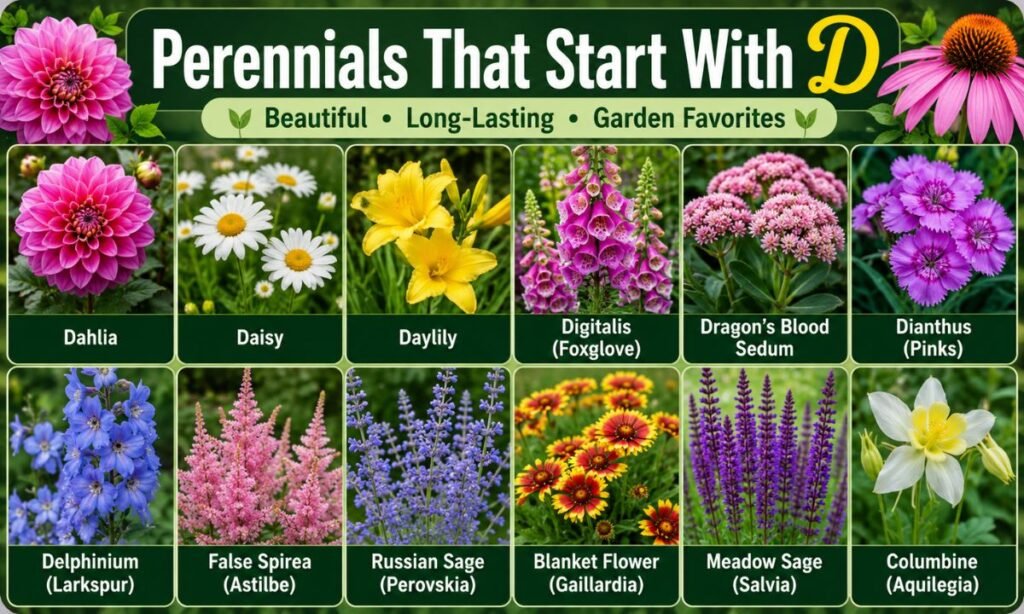
Popular perennial choices include Daylily, Delphinium, Dianthus, and Dicentra. These plants establish strong root systems over time. Many perennials also spread naturally, filling garden beds with fuller blooms each season.
Annual Flowers That Start With D
Annual D flowers complete their life cycle within one growing season. They often bloom heavily and add fast color to gardens.
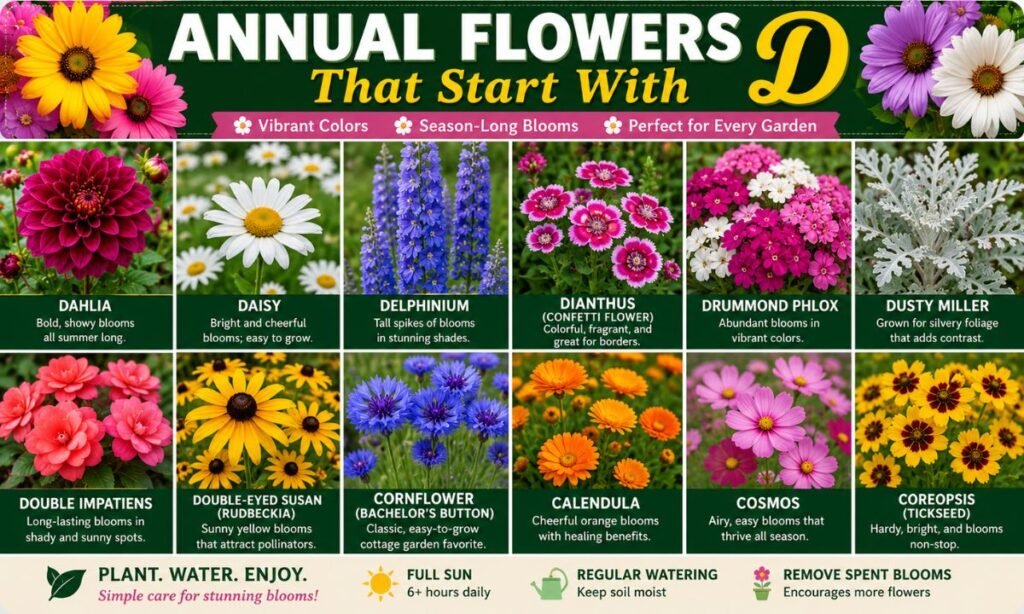
Drummond Phlox is a top annual choice, known for bright, star shaped flowers. In colder climates, Dahlias are also often grown as annuals since their tubers cannot survive frost. Annuals are great for gardeners who like changing designs each year.
Beginner Friendly Choices
Some D flowers are easier to grow than others. Beginners should look for flowers that tolerate mistakes and need little care.
- Daffodil, very low maintenance bulb
- Daisy, grows in most soil types
- Dandelion, grows almost anywhere
- Daylily, drought tolerant once established
These flowers forgive occasional missed watering and still bloom well.
Explore More Flowers Guide
74 Amazing Flowers That Start With A
Color Filters
Choosing flowers by color helps match garden themes and design goals. Below are D flowers sorted by common color groups.
Purple Flowers That Start With D
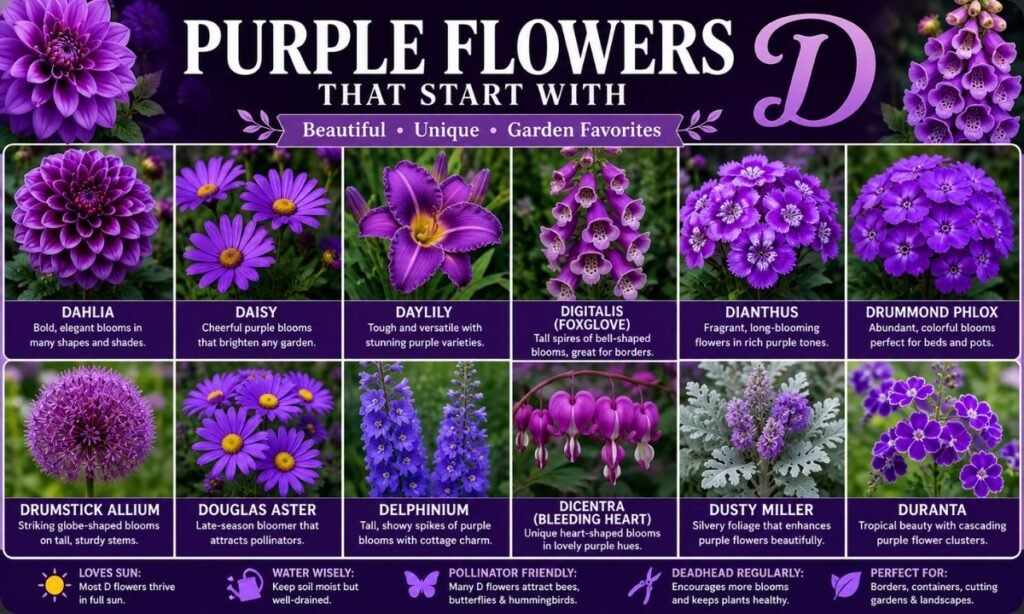
| Flower Name | Color Shade | Plant Type | Bloom Season | Growing Zones |
|---|---|---|---|---|
| Dame’s Rocket | Purple, Lavender | Biennial/Perennial | Spring–Early Summer | 3–9 |
| Dwarf Iris | Purple | Perennial Bulb | Early Spring | 3–9 |
| Delphinium | Purple | Perennial | Late Spring–Summer | 3–7 |
| Dianthus | Purple-Pink | Perennial | Spring–Summer | 3–9 |
| Douglas Aster | Purple | Perennial | Late Summer–Fall | 5–9 |
| Drumstick Allium | Purple | Bulb | Late Spring–Early Summer | 4–8 |
| Dendrobium Orchid | Purple | Orchid | Winter–Spring | 10–12 |
| Dahlia (Purple Cultivars) | Purple | Tuberous Perennial | Summer–Fall | 8–11 |
| Dutch Iris | Deep Purple | Bulb | Late Spring | 5–9 |
| Dwarf Phlox | Purple | Perennial | Spring | 3–9 |
Yellow Flowers Names Starting With D
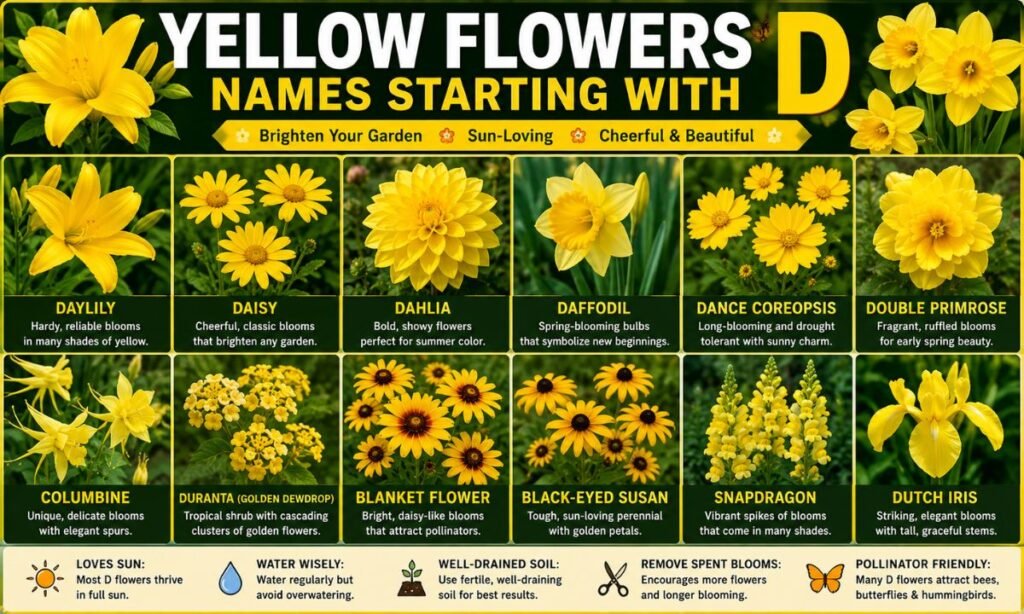
| Flower Name | Color Shade | Plant Type | Bloom Season | Growing Zones |
|---|---|---|---|---|
| Dahlia | Yellow | Tuberous Perennial | Summer–Fall | 8–11 |
| Desert Marigold | Bright Yellow | Perennial | Spring–Fall | 6–10 |
| Daylily | Golden Yellow | Perennial | Summer | 3–10 |
| Dogwood (Yellow Cultivars) | Pale Yellow | Tree | Spring | 5–9 |
| Daffodil | Bright Yellow | Bulb | Early Spring | 3–8 |
| Dahlberg Daisy | Yellow | Annual | Spring–Fall | 9–11 |
| Dusty Miller (Yellow Blooms) | Yellow | Perennial | Summer | 8–10 |
| Dutchman’s Breeches | Soft Yellow-White | Perennial | Spring | 3–7 |
| Dyer’s Chamomile | Golden Yellow | Perennial | Summer | 3–8 |
| Desert Sunflower | Bright Yellow | Annual | Spring–Summer | 7–10 |
White Flowers Names Starting With D
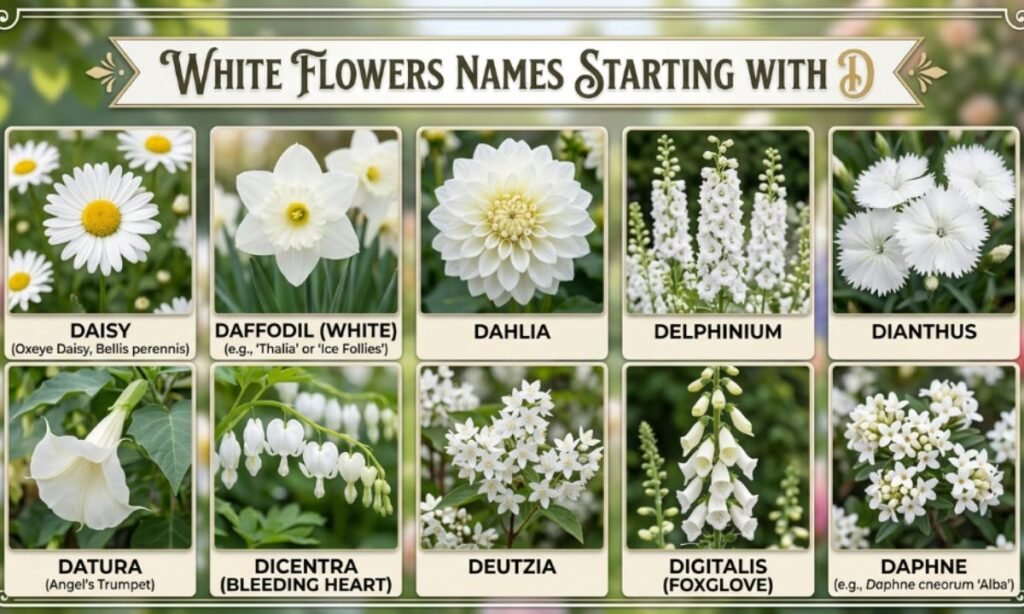
| Flower Name | Color Shade | Plant Type | Bloom Season | Growing Zones |
|---|---|---|---|---|
| Daisy | White | Perennial | Spring–Summer | 4–8 |
| Daphne | White | Shrub | Late Winter–Spring | 4–9 |
| Dogwood Blossom | White | Tree | Spring | 5–9 |
| Datura | White | Annual/Perennial | Summer–Fall | 9–11 |
| Dutchman’s Breeches | White | Perennial | Spring | 3–7 |
| Dianthus | White | Perennial | Spring–Summer | 3–9 |
| Double Impatiens | White | Annual | Summer–Fall | 10–11 |
| Dendrobium Orchid | White | Orchid | Winter–Spring | 10–12 |
| Dahlia (White Cultivars) | White | Tuberous Perennial | Summer–Fall | 8–11 |
| Deutzia | White | Shrub | Spring | 5–8 |
Blue Flowers Names Starting With D
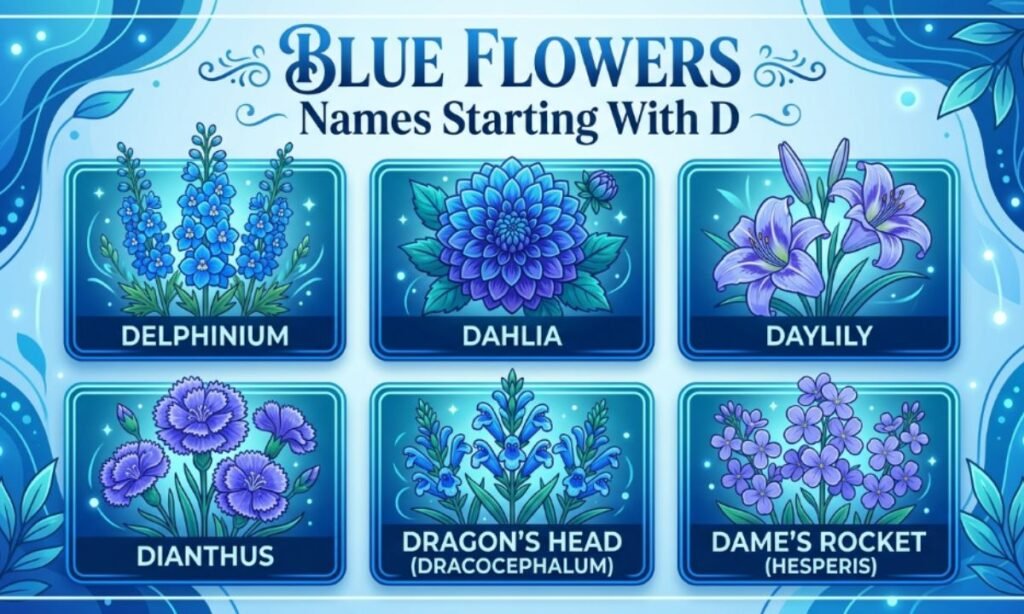
| Flower Name | Color Shade | Plant Type | Bloom Season | Growing Zones |
|---|---|---|---|---|
| Delphinium | Blue | Perennial | Late Spring–Summer | 3–7 |
| Dutch Iris | Blue | Bulb | Late Spring | 5–9 |
| Dwarf Morning Glory | Sky Blue | Annual | Summer | 8–11 |
| Dwarf Lobelia | Blue | Annual | Spring–Fall | 10–11 |
| Desert Bluebells | Blue | Annual | Spring | 8–11 |
| Dayflower | Blue | Annual | Summer | 5–10 |
| Dendrobium Orchid (Blue Hybrids) | Blue-Violet | Orchid | Winter–Spring | 10–12 |
| Douglas Iris | Blue-Violet | Perennial | Spring | 7–10 |
| Dianthus (Blue-Green Foliage, Lavender Blooms) | Blue-Lavender | Perennial | Spring–Summer | 3–9 |
| Delosperma (Blue Cultivars) | Blue-Lilac | Succulent Perennial | Summer | 5–9 |
Pink, Red, And Orange D Flowers
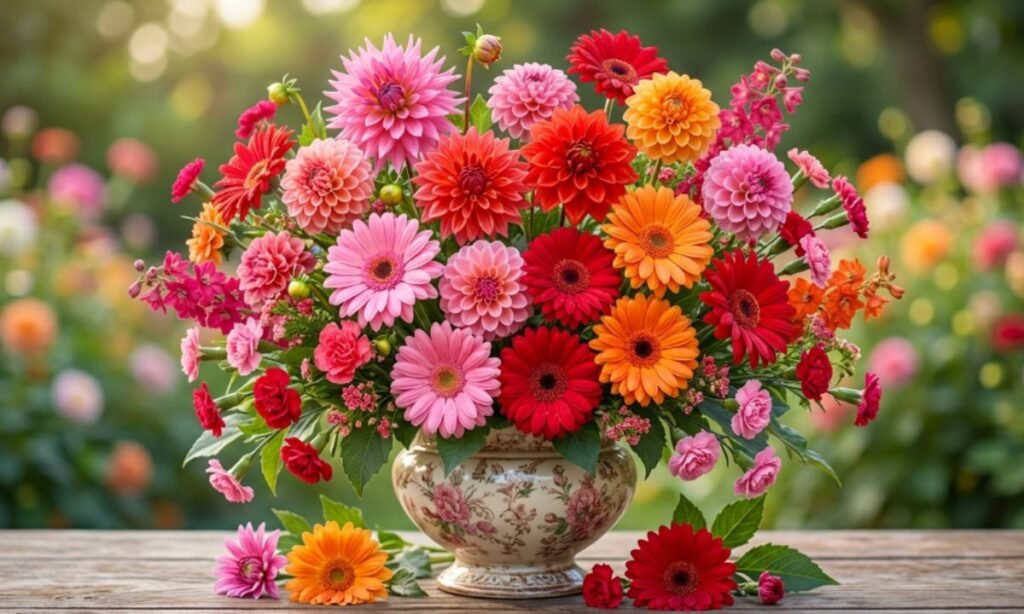
| Flower Name | Main Color | Plant Type | Bloom Season | Growing Zones |
|---|---|---|---|---|
| Dahlia | Pink, Red, Orange | Tuberous Perennial | Summer–Fall | 8–11 |
| Dianthus | Pink, Red | Perennial | Spring–Summer | 3–9 |
| Desert Rose | Pink, Red | Succulent Shrub | Spring–Fall | 10–12 |
| Double Impatiens | Pink, Red, Orange | Annual | Summer–Fall | 10–11 |
| Dwarf Zinnia | Pink, Red, Orange | Annual | Summer–Fall | 3–10 |
| Daylily | Orange, Red | Perennial | Summer | 3–10 |
| Dragon Lily | Dark Red | Perennial | Late Spring | 5–8 |
| Dancing Lady Orchid | Orange-Yellow | Orchid | Winter–Spring | 10–12 |
| Dicentra (Bleeding Heart) | Pink, Red | Perennial | Spring | 3–9 |
| Drummond Phlox | Pink, Red | Annual | Spring–Summer | 2–11 |
Indoor And Container-Friendly Choices
Not everyone has garden space. Many D flowers grow well indoors or in containers on patios and balconies.
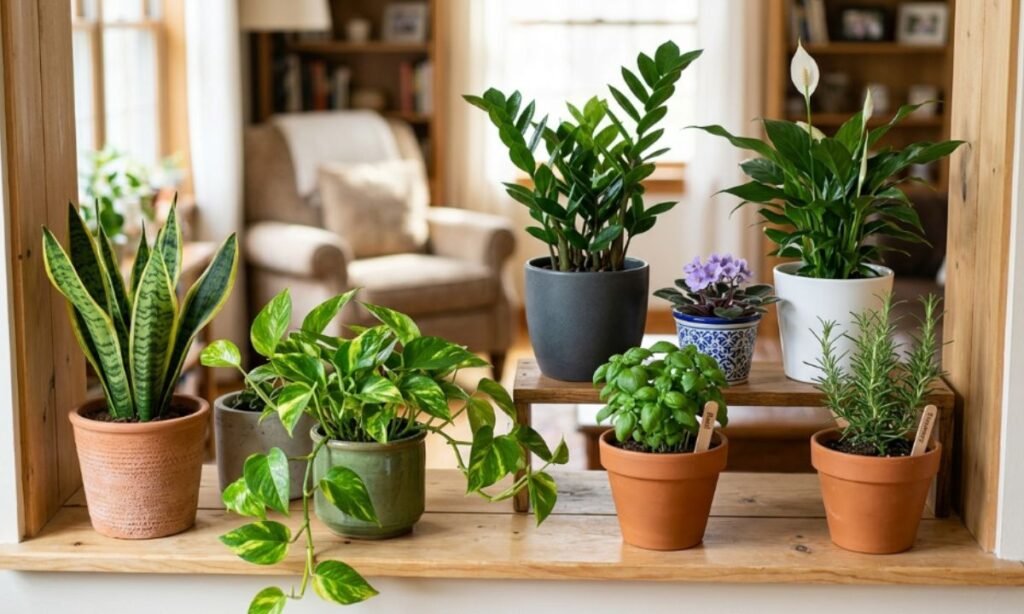
Dendrobium Orchids thrive as houseplants with the right light. Desert Rose also does well in pots due to its compact, succulent growth. Dianthus and Dahlia varieties bred for containers work well on small patios too.
Best D Flowers For Pots And Small Spaces
Small space gardening needs flowers that stay compact and do not spread aggressively.
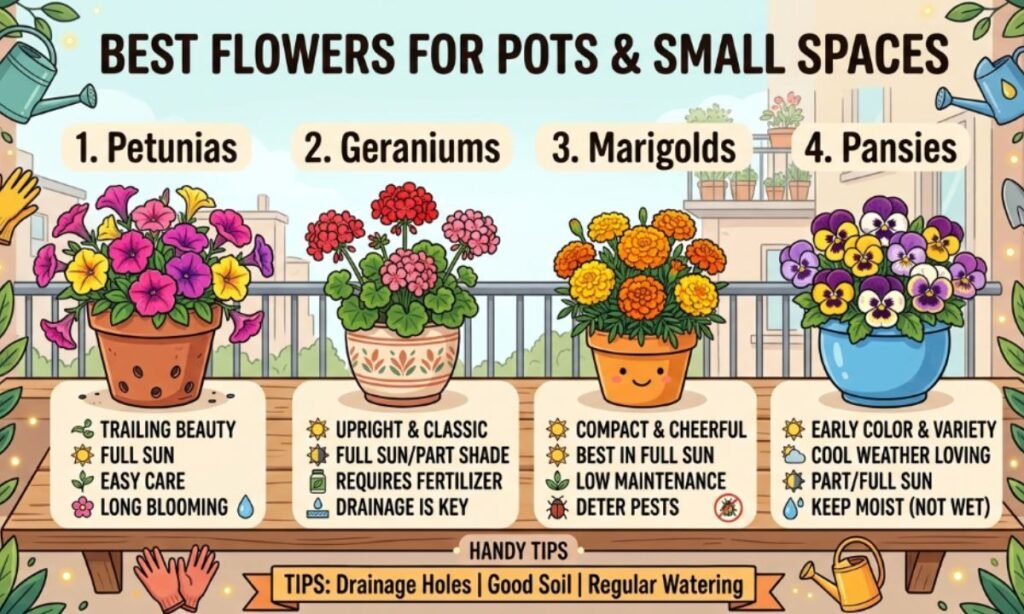
- Dianthus, compact and fragrant
- Desert Rose, slow growing succulent
- Dwarf Dahlia varieties, bred for pots
- Dendrobium Orchid, vertical growth habit
These choices suit balconies, window boxes, and small patios.
Fragrance, Pollinators, And Use In The Garden
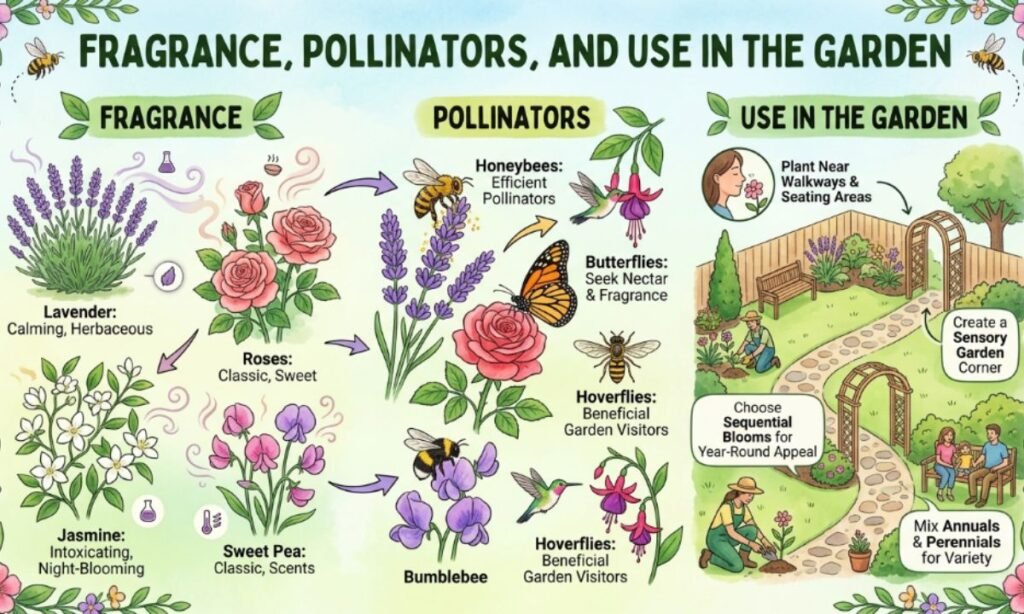
Fragrance and pollinator support are two major reasons gardeners choose specific flowers. D flowers offer strong options in both areas.
Fragrant D Flowers
Daphne is one of the most fragrant shrubs available, with a scent that fills entire garden areas. Damask Rose also carries a rich, classic fragrance used in perfumes.
Pollinator Friendly And Meadow Picks
Dandelion, Douglas Aster, and Drummond Phlox all attract bees and butterflies. These flowers support pollinator populations, especially in early and late season when fewer blooms are available.
Cut Flower And Bouquet Favorites
Dahlia and Dutch Iris are top choices for cut flower arrangements. Both hold up well in vases and offer strong color impact. Florists often rely on these for both casual and formal bouquets.
Flower Meanings And Symbolism For D Flowers
Flowers often carry symbolic meaning tied to emotions or occasions. D flowers are no exception.
| Flower | Common Meaning |
| Daffodil | New beginnings, rebirth |
| Dahlia | Elegance, inner strength |
| Daisy | Innocence, purity |
| Dandelion | Wishes, resilience |
| Daylily | Motherhood, devotion |
These meanings often guide flower choices for gifts, weddings, and memorials.
Growing Requirements For D Flowers
Different D flowers need different care. Most prefer well drained soil and moderate sunlight, but exceptions exist. Daffodils and Dutch Iris need a cold period to bloom properly, making them ideal fall plantings. Dahlias need frost free conditions and regular watering during growth. Shade loving plants like Dicentra do best under trees or in north facing beds.
Soil quality matters greatly for long term success. Adding compost improves drainage and nutrient levels for most D flowers. Watering needs vary, so checking each plant’s specific requirements before planting is important.
Water And Pond Flower Picks
Some D flowers thrive near water features. While true aquatic D flowers are rare, moisture loving types like certain Daylily varieties do well near pond edges. These plants tolerate consistently damp soil better than average garden flowers.
Broader D Bloomers, Caution Notes, And Common Mix Ups
Beyond common garden flowers, several other D named blooms exist in wild and tropical regions. Datura, also called Angel’s Trumpet, produces large trumpet shaped flowers but carries serious toxicity risks. Dombeya, a tropical shrub, produces clusters of pink or white flowers and grows well in warm climates.
Gardeners should research any unfamiliar D flower before planting near pets, children, or livestock.
Toxic Or Caution-Worthy Entries
Some D flowers look beautiful but carry health risks if touched or eaten.
- Digitalis (Foxglove): highly toxic if ingested
- Datura: toxic, can cause severe reactions
- Desert Rose: toxic sap, harmful if consumed
- Daffodil bulbs: toxic if eaten, especially to pets
Always plant these away from areas where children or animals play unsupervised.
Common Mix Ups In D Flower Lists
Many flower lists that start with the letter D accidentally include plants that are not true flowers or confuse similar-looking species. The table below highlights some of the most common mix-ups.
| Common Mix-Up | Correct Information | Why It’s Confused |
|---|---|---|
| Daffodil vs Narcissus | Daffodil is the common name for many Narcissus species. | People think they are different flowers. |
| Daisy vs Dahlberg Daisy | Dahlberg Daisy (Thymophylla tenuiloba) is not the same as the common daisy (Bellis perennis). | Both have daisy-like blooms. |
| Desert Rose vs Rose | Desert Rose (Adenium obesum) is a succulent, not a true rose. | The flowers resemble roses. |
| Dogwood vs Dogwood Blossom | Dogwood is the flowering tree, while the blossom is simply its flower. | Lists sometimes count them as two separate flowers. |
| Dutch Iris vs Iris | Dutch Iris is one specific group of iris varieties. | Gardeners often list both separately. |
| Drumstick Allium vs Allium | Drumstick Allium (Allium sphaerocephalon) is one species within the Allium genus. | Similar flower shape and name. |
| Dianthus vs Carnation | Carnations belong to the Dianthus genus. | People treat them as unrelated flowers. |
| Delphinium vs Larkspur | Annual larkspurs belong to the Delphinium genus but differ from perennial delphiniums. | Similar flower spikes and colors. |
| Daphne vs Daphne Shrub | Daphne is the flowering shrub itself, not a separate flower species. | The plant and flower share the same name. |
| Douglas Aster vs Aster | Douglas Aster is one native species of aster. | Included twice in alphabetical lists. |
| Dragon Lily vs Dragon Arum | These are different common names for the same plant (Dracunculus vulgaris). | Duplicate entries appear in lists. |
| Dusty Miller vs Flower | Dusty Miller is mainly grown for its silvery foliage, though it does flower. | Often mistaken as a flower-only plant. |
| Dutchman’s Pipe vs Flower | Grown mainly as a vine; its flowers are unusual and often overlooked. | Included because of its decorative blooms. |
| Daylily vs True Lily | Daylilies (Hemerocallis) are not true lilies (Lilium). | Similar flower appearance. |
| Dandelion vs Wildflower | Dandelion is a true flowering plant, not just a common weed. | Frequently excluded from flower lists. |
Conclusion
Flowers that start with D offer incredible variety, from the humble Dandelion to the elegant Dahlia. This letter covers bulbs, perennials, annuals, shrubs, and even tropical blooms. Whether you want fragrance, pollinator support, or simple beauty, D flowers have an option for every garden style.
Choosing the right D flower depends on your climate, space, and care preferences. Beginners can start with easy options like Daffodil or Daisy, while experienced gardeners may enjoy the challenge of Dahlia or Dendrobium Orchid. With proper planning, D flowers can bring color and life to any garden for years to come.
Frequently Asked Questions
What is the most popular flower that starts with D?
Daffodil and Dahlia are the two most popular D flowers grown worldwide.
Are Dandelions considered real flowers?
Yes, Dandelions are true flowering plants and an important early food source for bees.
Is Digitalis safe to grow at home?
Digitalis is toxic if eaten, so it should be planted carefully away from pets and children.
Do Dahlias come back every year?
In warm climates yes, but in cold regions Dahlia tubers must be dug up and stored over winter.
What does a Daylily flower symbolize?
Daylilies often symbolize motherhood and devotion in flower meaning traditions.
Can Dianthus grow indoors?
Yes, compact Dianthus varieties grow well in pots placed near sunny windows.
What is the rarest D flower?
Certain wild Dendrobium Orchid species and Douglas Aster are considered rarer than common garden D flowers.